Kassia Undead (2025) - Lara Barsacq

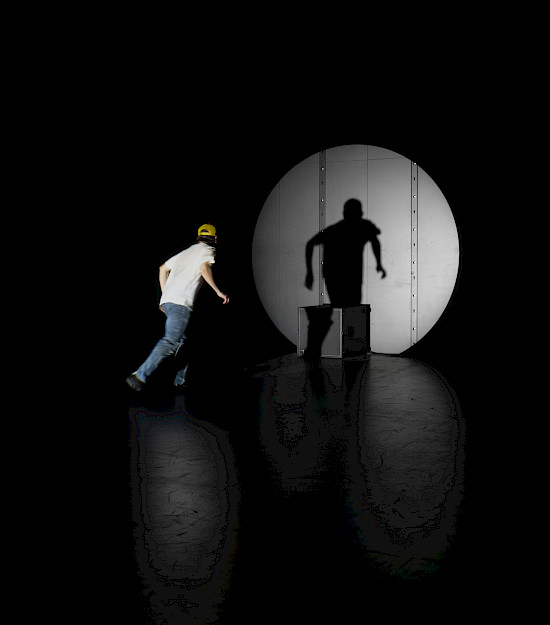
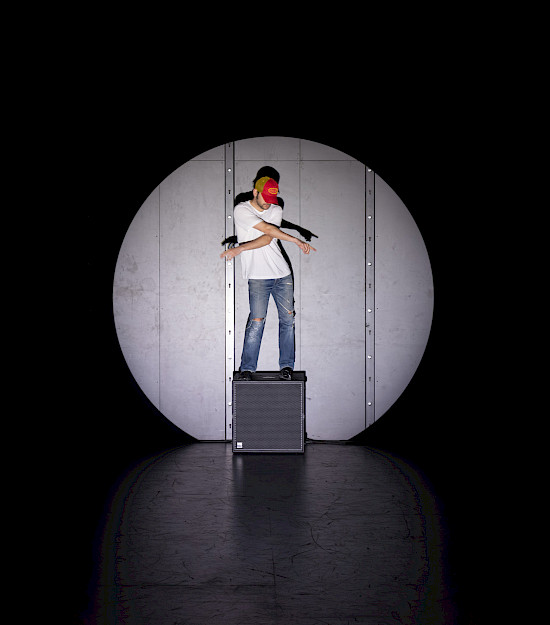
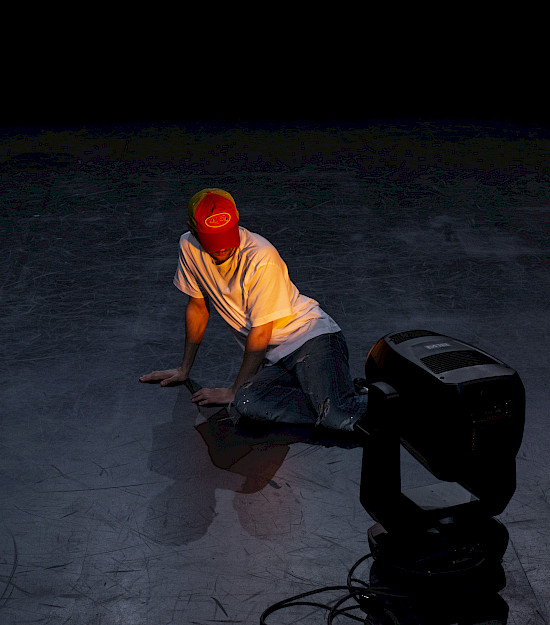
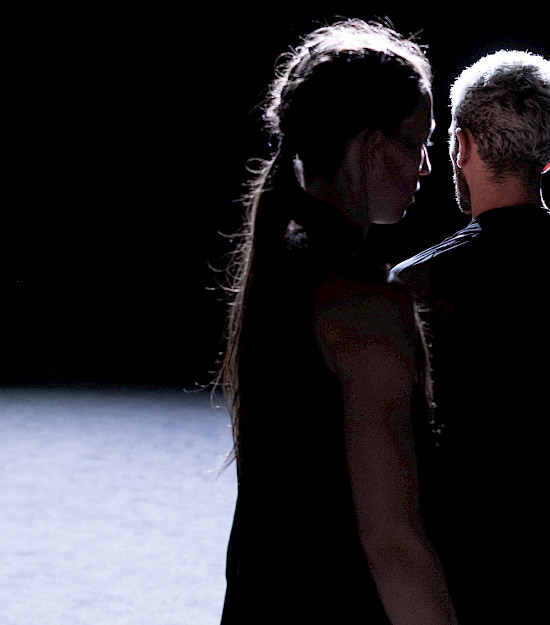
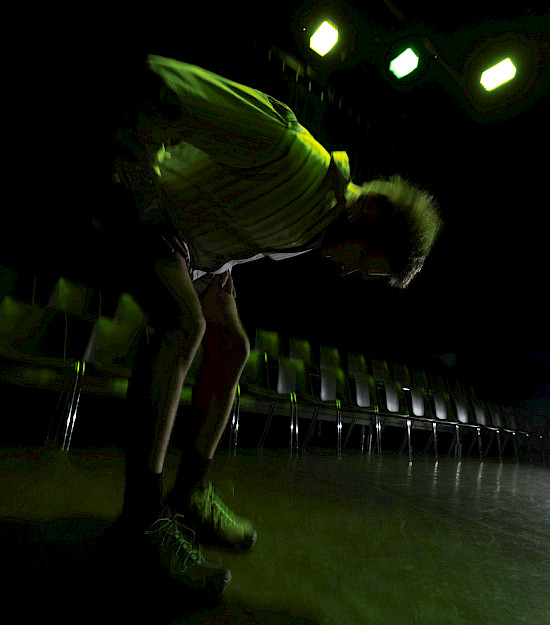
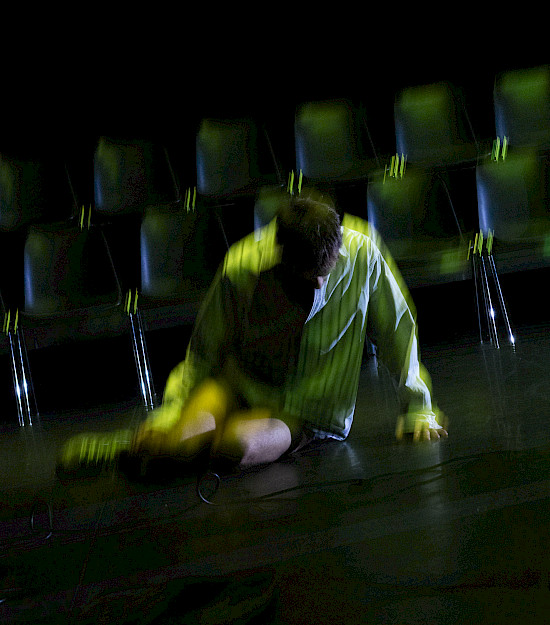
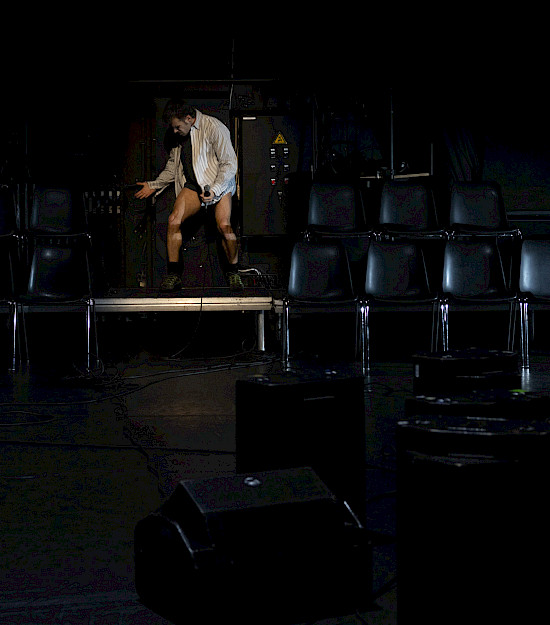
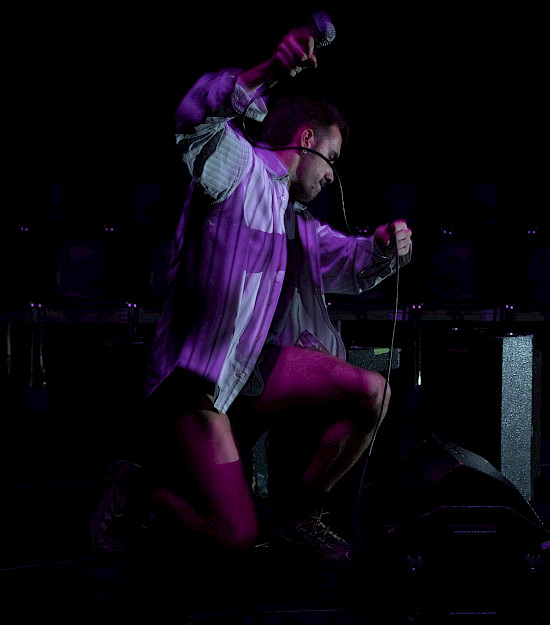
Between archives, fiction, documentary, autobiography and ritual, Lara Barsacq interweaves the tracks like no one else, and brings back into the light and into dialogue with our times some of history's forgotten women. A canonised hymn writer of the Byzantine Empire, Kassia was one of the first female composers of the Middle Ages whose scores have been preserved. Her work inspires the choreographer to make a cultural and temporal journey, a poetic attempt at exchanges with the beyond.
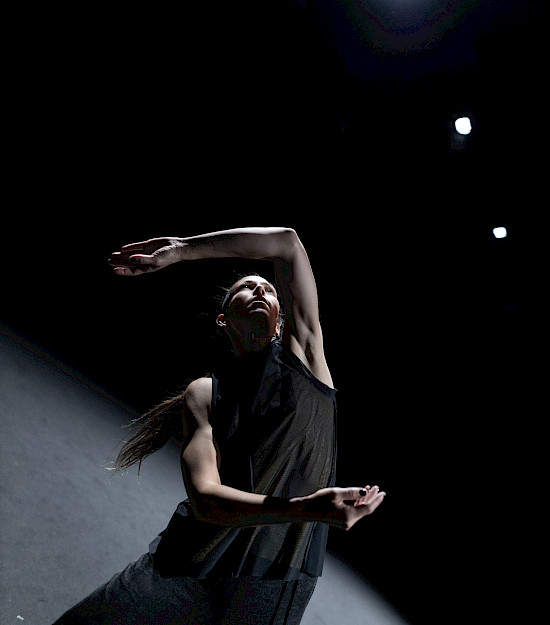
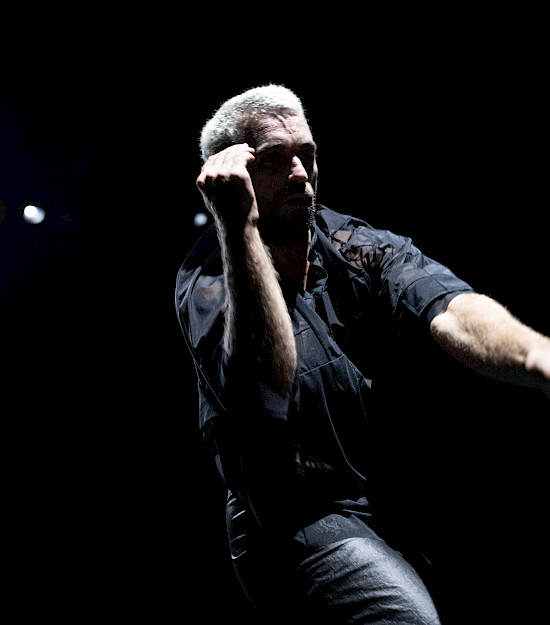
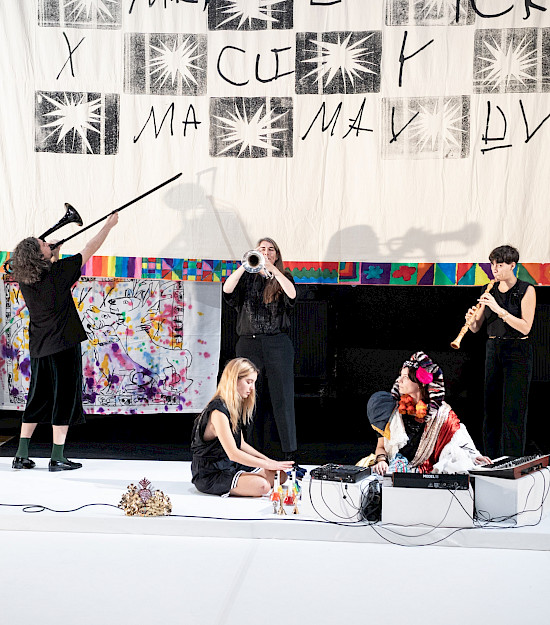
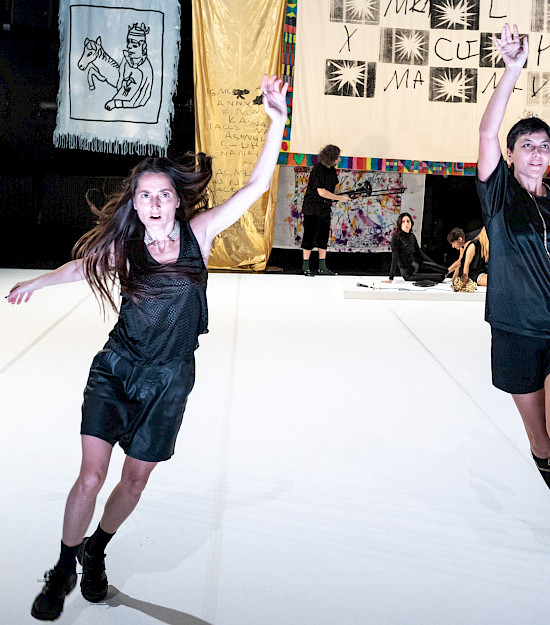
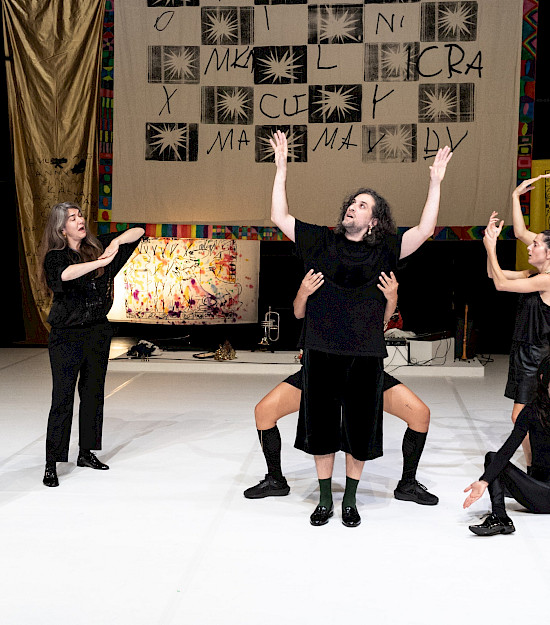
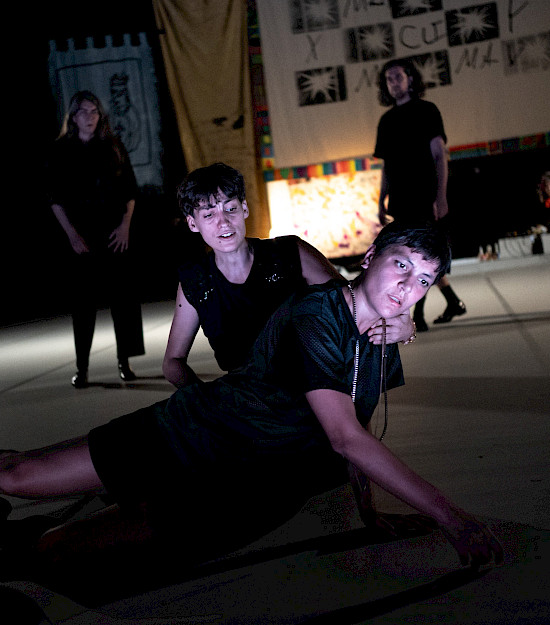
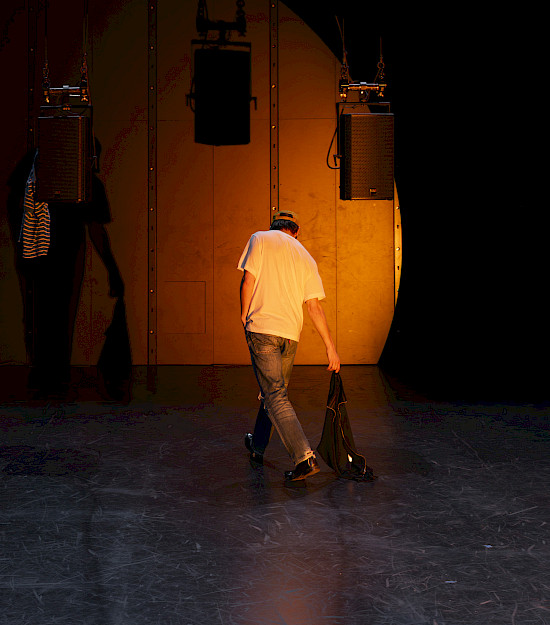
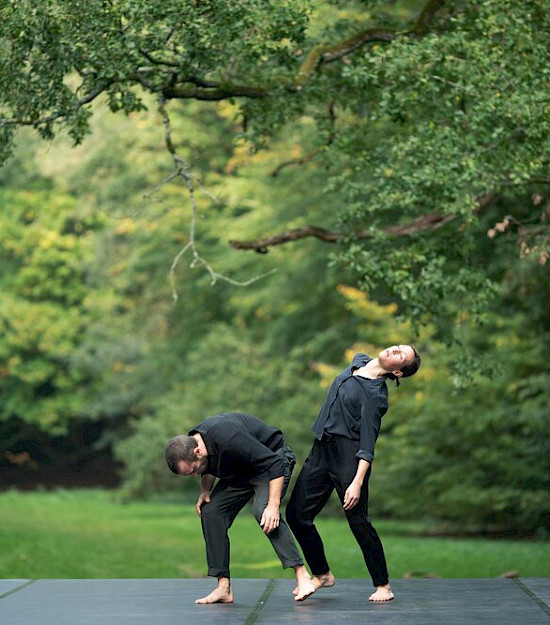
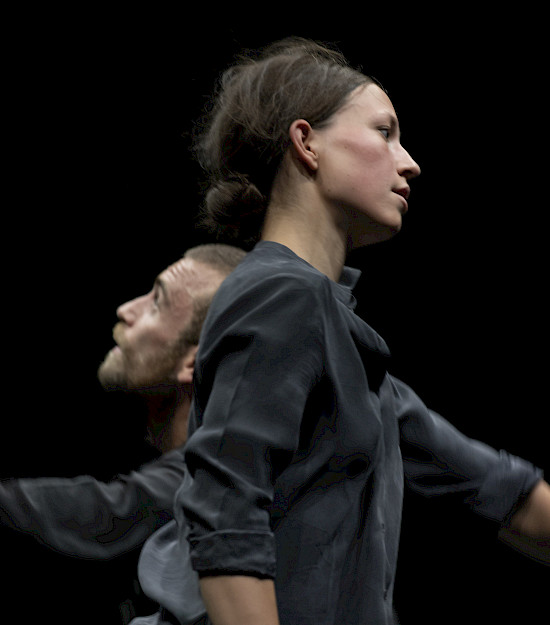
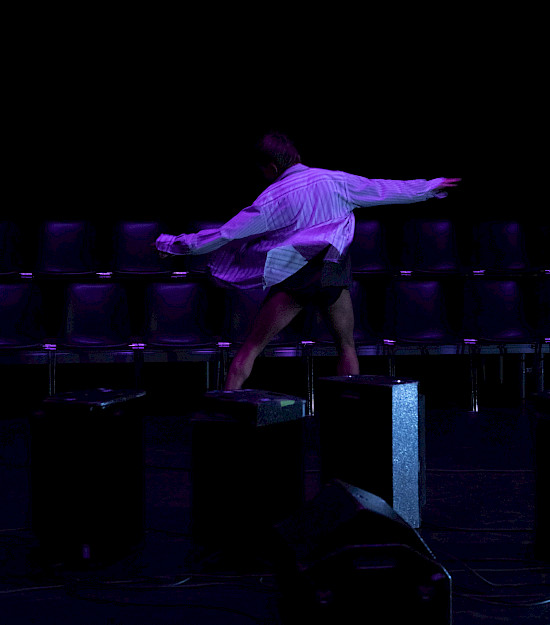
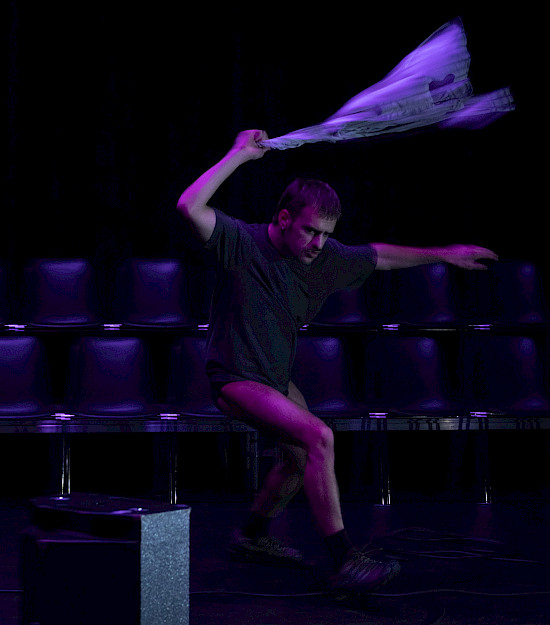
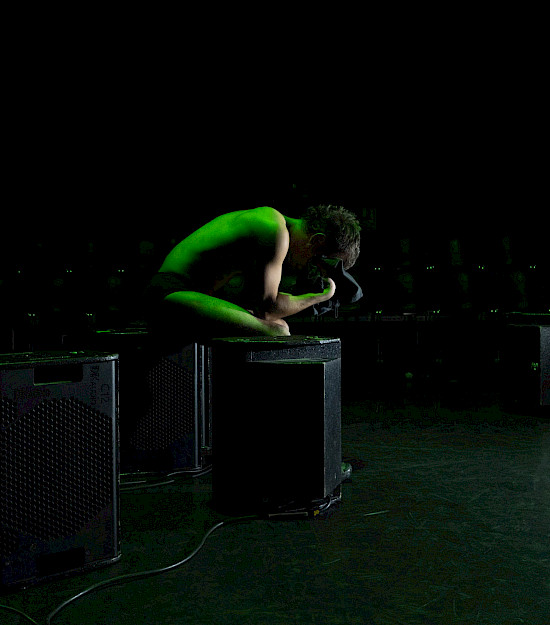
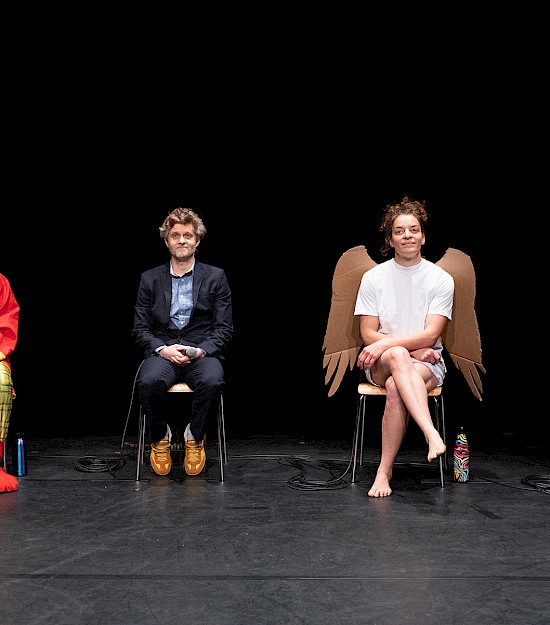
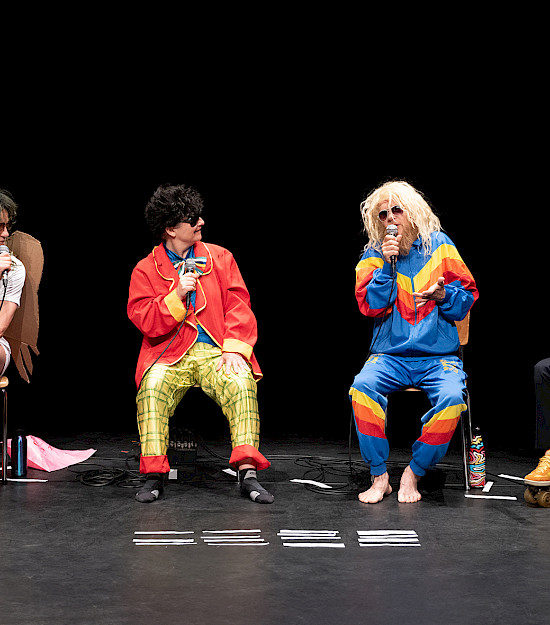
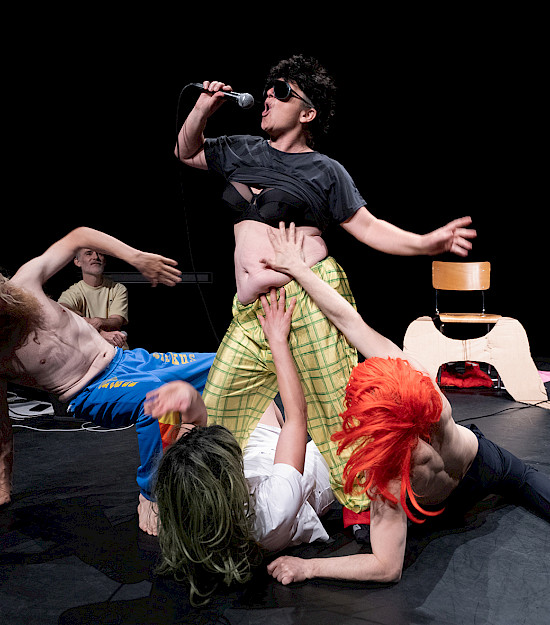
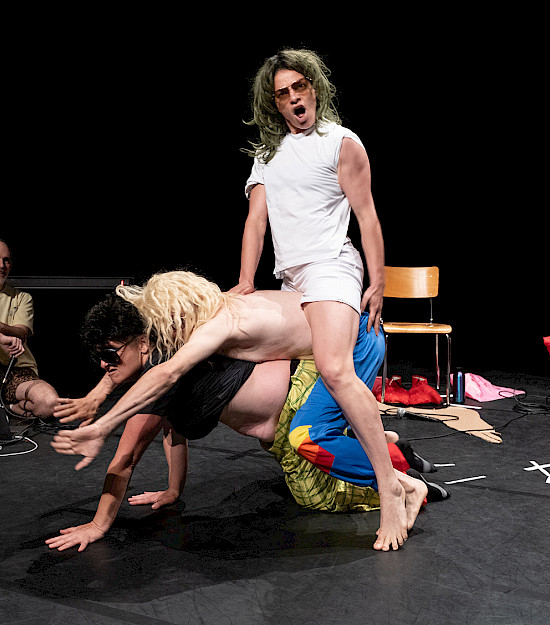
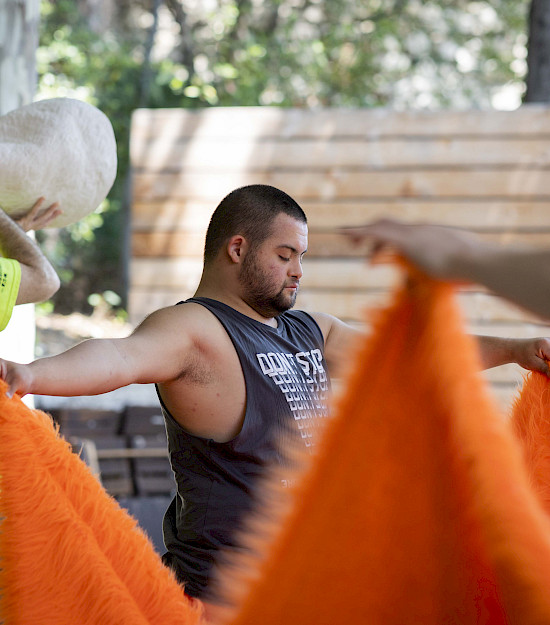
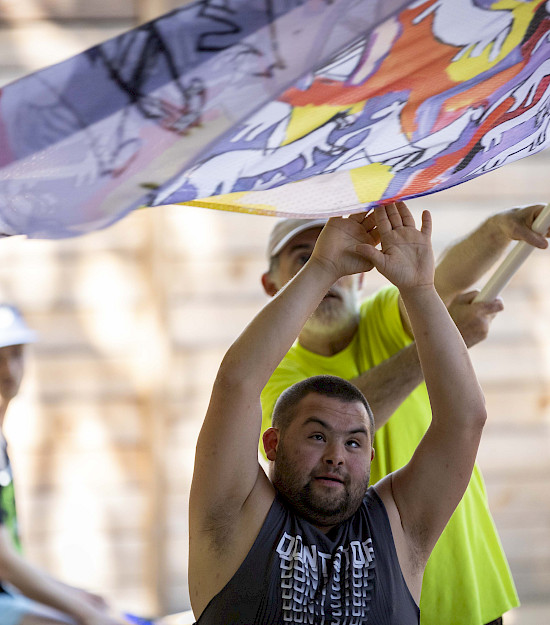
Somewhere between figures and troubadours, eight dancers and/or singers explore the duality between the divine and the demonic, the paths of necromancy and divination, the confluence of East and West, and the sources of polyphonic art. The stage will be draped with canvases and banners inspired by medieval and contemporary imagery. A moving landscape for a journey through time, from the distant past to the near future. M.B.
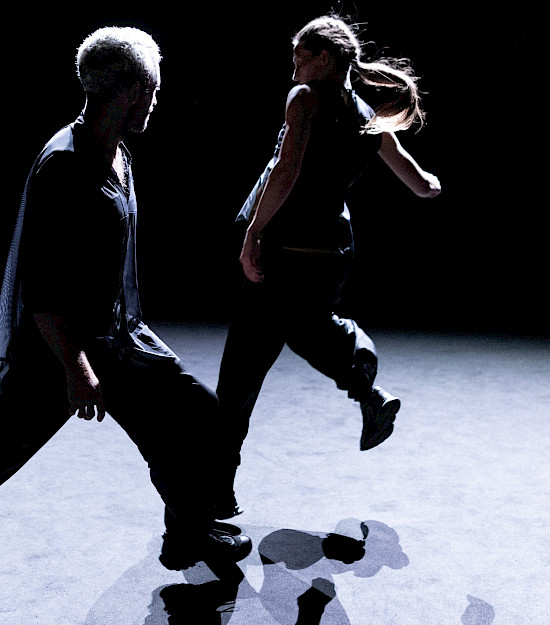
After Lost in Ballets russes (2018), IDA don’t cry me love (2019), Fruit Tree (2021) and La Grande Nymphe (2023), Kassia Undead is Lara Barsacq’s fifth project. In 2027, Lara will create JAUNE pour Jour(s).

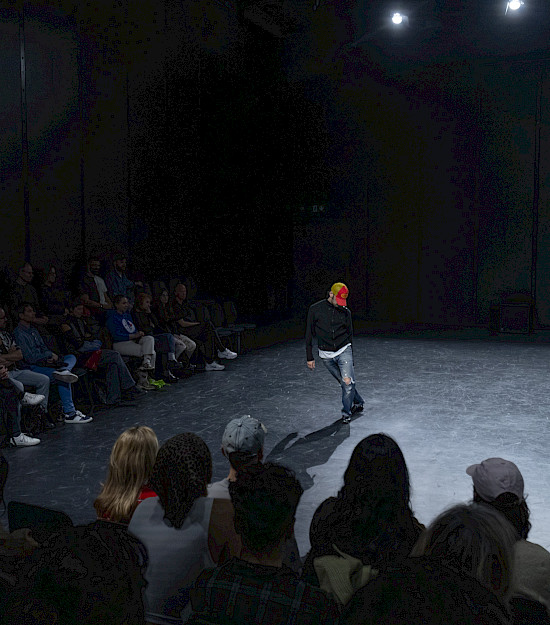
Kassia Undead premiered from 9 to 11 October 2025 in Théâtre de Liège ; with the performance on October 10 in the frame of Biennale de Charleroi danse and the Objectifs Danse platform.


Kassia Undead - a project by Lara Barsacq (65’, 2025)

Creation and performance: Marta Capaccioli, Tarek Halaby, Cate Hortl, Emma Laroche-Brassié, Els Mondelaers, Aymara Parola, Agnes Potié, Klara Verkin
Original music: Cate Hortl
Music: Kassia de Constantinople, Salim Bali
Light design: Estelle Gautier
Artistic advisor: Gaël Santisteva
Voice coaching: Jean-Baptiste Veyret-Logerias
Art historian: Brunella Danna Allegrini
Stage design: Ateliers Indigo - Alexandra Siebert, Alice Forsberg, Clara Vandebotermet, Jean Everarts, Magali Cote, Patricia Calà (accompanied by Lily Sato, Adrien Vermont, Maya de Mondragon, Corinne Chotycki)
Screenprinting: Frédéric Jamagne
Set design intern: Teo Verougstraete
Costumes design: Lara Barsacq
Costumes production: Catherine Somers and the costume workshops of the Théâtre de Liège
Technical direction: Emma Laroche-Brassié
Sound: Benoit Pelé, Fred Miclet
Administration & production: Myriam Chekhemani, Mélanie Jourdan (La chouette diffusion)
Communication & distribution: Quentin Legrand (Rue Branly)
Production: Gilbert & Stock
Coproduction: Théâtre de Liège, Charleroi danse - Centre Chorégraphique de la Fédération Wallonie-Bruxelles, Les Brigittines, December Dance (Concertgebouw Brugge & CC Brugge), DC&J Création (BE), Cité musicale-Metz, La Briqueterie CDCN (FR)
Residencies: Charleroi danse, Théâtre de Liège, Grand Studio (BE), La Briqueterie CDCN (FR), CSC - Centro per la scena contemporanea (IT)
With the support of Fédération Wallonie-Bruxelles, Wallonie-Bruxelles International, Grand Studio, the Tax Shelter of the Belgian Federal Government, and Inver Tax Shelter

Lara Barsacq is artist in residence at Théâtre de Liège (2024-2028) and at Cité musicale-Metz (2024-2026).

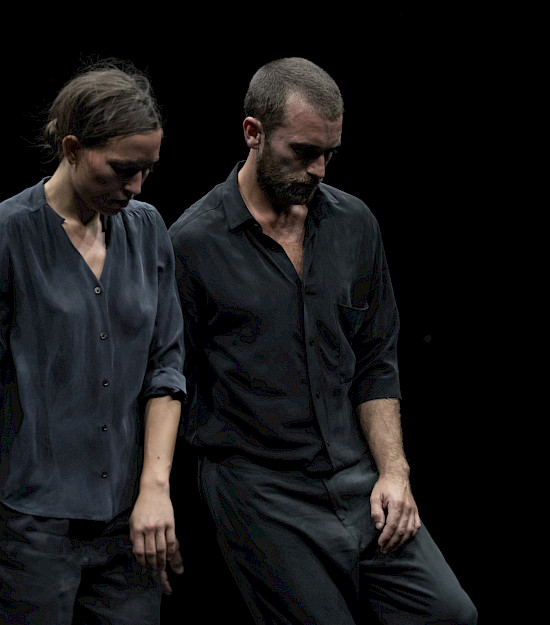
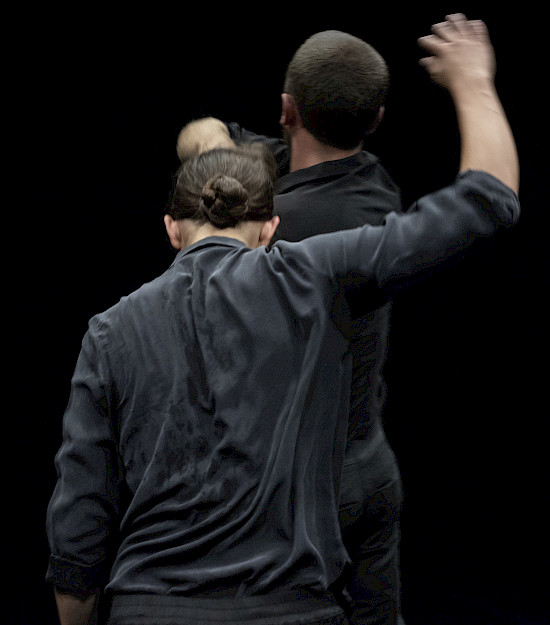
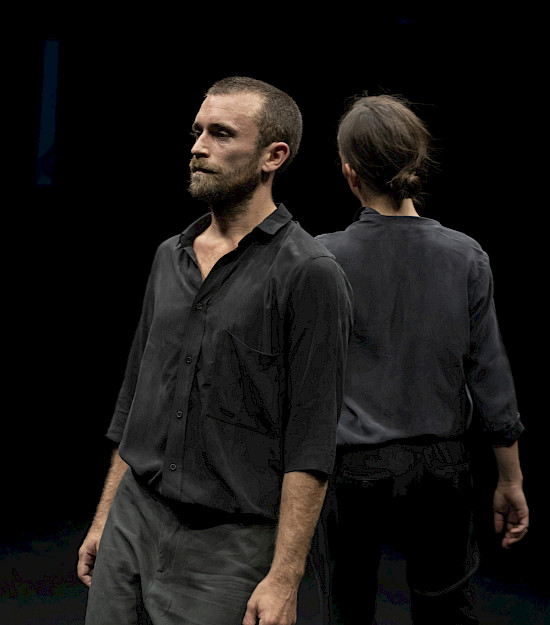
Photos: Stanislav Dobak


UPCOMING TOUR DATES

  • 30.05.2026 | ONE Dance Festival, Plovdiv (BG)

  • 26.06.2026 | Spider Festival 2026, Ljubljana (SI) - (site specific)

  • 01.10.2026 | Le Maillon x Festival Musica x Pole Sud CDCN, Strasbourg (FR)

  • 02.10.2026 | Le Maillon x Festival Musica x Pole Sud CDCN, Strasbourg (FR)

PREVIOUS TOUR DATES

  • 09.10.2025 | Théâtre de Liège, Liège (BE) - PREMIERE

  • 10.10.2025 | Biennale de Charleroi danse x Théâtre de Liège, Liège (BE)

  • 11.10.2025 | Théâtre de Liège, Liège (BE)

  • 04.11.2025 | Les Brigittines, Bruxelles (BE)

  • 05.11.2025 | Les Brigittines, Bruxelles (BE)

  • 06.11.2025 | Les Brigittines, Bruxelles (BE)

  • 07.11.2025 | Les Brigittines, Bruxelles (BE)

  • 12.12.2025 | December Dance, Koninklijke Stadsschouwburg, Brugge (BE)

  • 17.12.2025 | Cité musicale-Metz, Metz (FR) - Première en France

  • 02.02.2026 | Pays de Danses, Théâtre de Liège, Liège (BE)

  • 20.03.2026 | Les Ecuries - Charleroi danse, Charleroi (BE)

  • 21.03.2026 | Les Ecuries - Charleroi danse, Charleroi (BE)

  • 11.05.2026 | Rencontres chorégraphiques internationales de Seine-Saint-Denis x Théâtre Public de Montreuil, Paris (FR)

  • 12.05.2026 | Rencontres chorégraphiques internationales de Seine-Saint-Denis x Théâtre Public de Montreuil, Paris (FR)


PRESS EXTRACTS

[ Review ] “Kassia Undead, by choreographer Lara Barsacq, treats the audience to a choral medley in Ancient Greek based on the works of Kassia of Constantinople (c. 810–c. 867), a Byzantine nun, poet and composer. (…) Since 2018 and her solo piece Lost in Ballets russes, (…) this Brussels-based choreographer has honed a unique signature style.
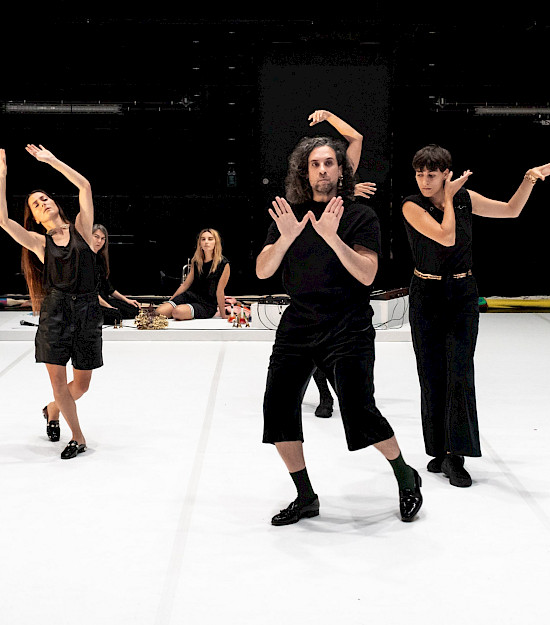
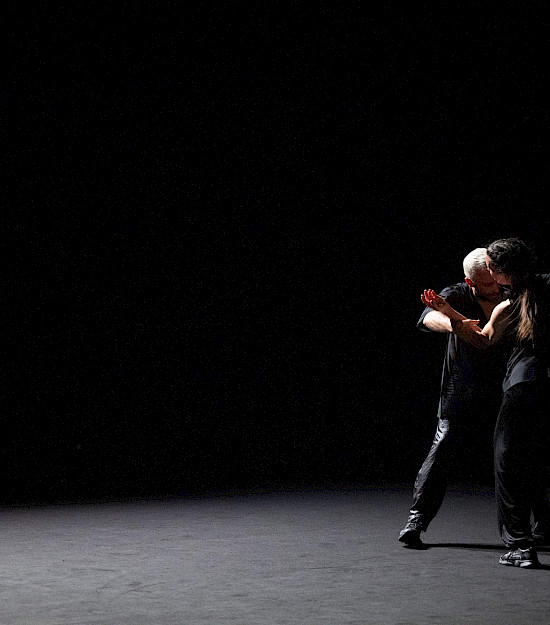
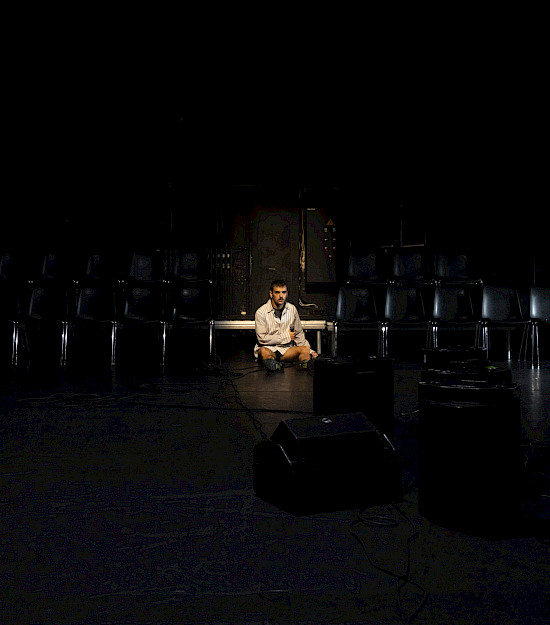
Weaving together documentary research and personal imagination, she finds herself at a shifting sensory crossroads, where movement, text and live music mutually reinforce one another. This is certainly true of this new work, conceived in collaboration with art historian Brunella Danna-Allegrini. Captivated by the songs and personality of the remarkable woman that was Kassia of Constantinople, Lara Barsacq has created a musical performance that perfectly reflects her penchant for the ‘frictions of eras’. The a cappella vocal compositions centred on the saints and martyrs of Kassia are performed with fervour by performers in shorts, black T-shirts and patent leather loafers. Their dances, almost naive in their sometimes medieval-inspired choreography, are imbued with a delightfully childlike playfulness.
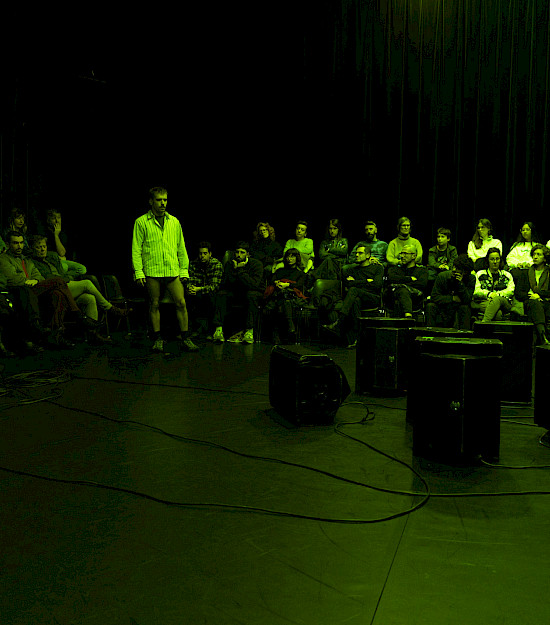
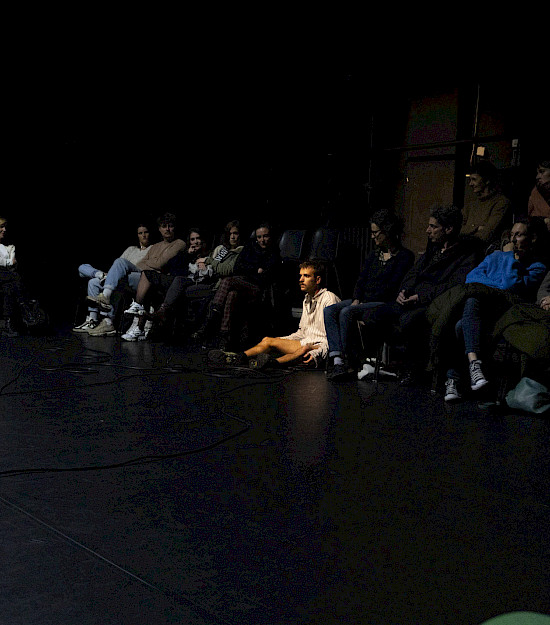
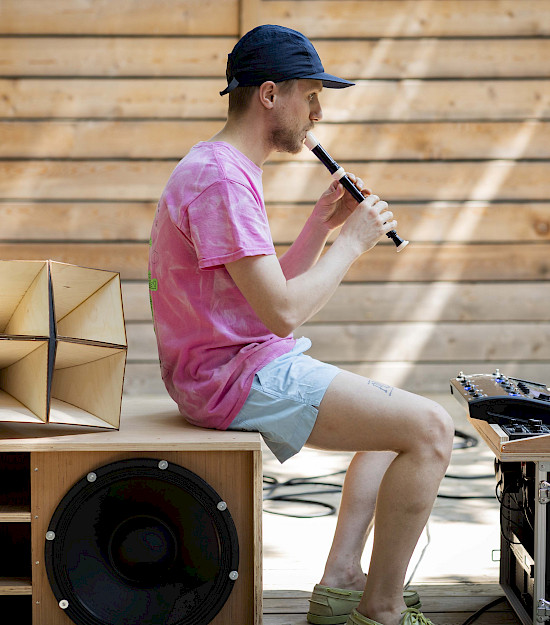
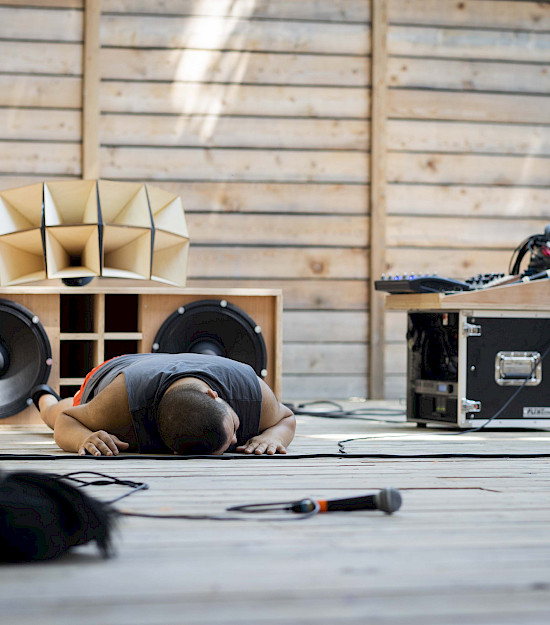
Somewhere between reverie and contemplation, Kassia Undead unfolds her procession in a sort of music salon of the kind Lara Barsacq loves, where some of the singers, and Cate Hortl on keyboards, sit on the floor. Here we find the appeal of this artist’s work, which seeks to preserve the spontaneity and fragility of the performance by showcasing the group of performers. Like a friendly gathering where we celebrate Kassia by dancing, singing and bringing out the trumpet and oboe, the piece weaves together present and past in a suspended fiction of discovery and happiness. A bubble that stops time and flows gently by.”
Rosita Boisseau, Le Monde, 13.05.26

[ Review ] “Kassia Undead is a live reinterpretation of a 9th-century Byzantine poet and composer: Kassia of Constantinople. The choreographer, thankfully, does not treat this as a mere musicological endeavour, but rather as a political weapon: Kassia Undead will celebrate this woman’s freedom and audacity, and remind us of a time when the West and the East met and conversed in Constantinople. Beyond the necessary and valuable gesture of recognising a female figure forgotten in the patriarchal history of music and the arts, Kassia Undead is perhaps, above all, this: the blessing of a civilisational encounter in a reactionary and deadly present where some preach ad nauseam a war of civilisations, or indeed the emancipatory and active celebration of queerness, urging the joyful transcendence of roles and assignments. (…) The beauty of Kassia Undead lies in the fact that the piece never freezes in a narcissistic pause, in an image, but is, on the contrary, perpetual motion, constantly transporting us elsewhere. It is not a dogma, nor even a hagiographic gesture, but borrows the wild freedom of its muse. (…) Through the grace of its performers, interweaving song and movement, Kassia Undead masterfully unfolds its maieutics of the hermetic and wins us over body and soul.”
Nicolas Thevenot, Un fauteuil pour l’orchestre, 19.05.26

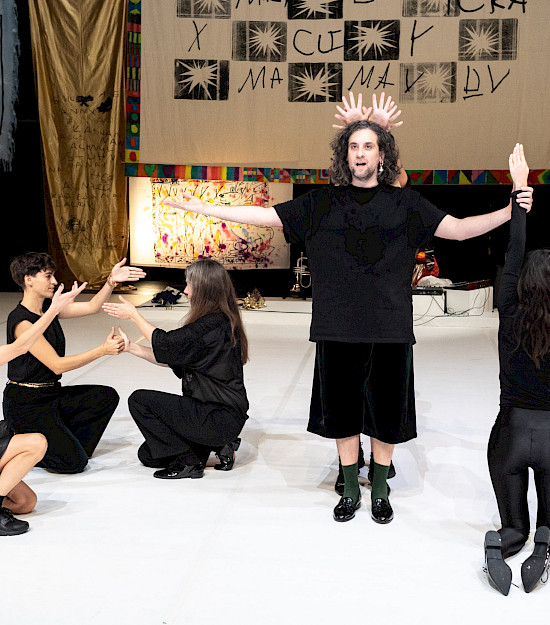
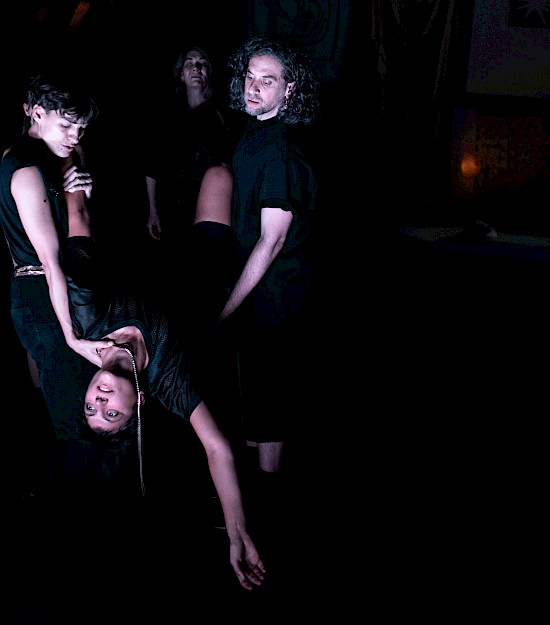
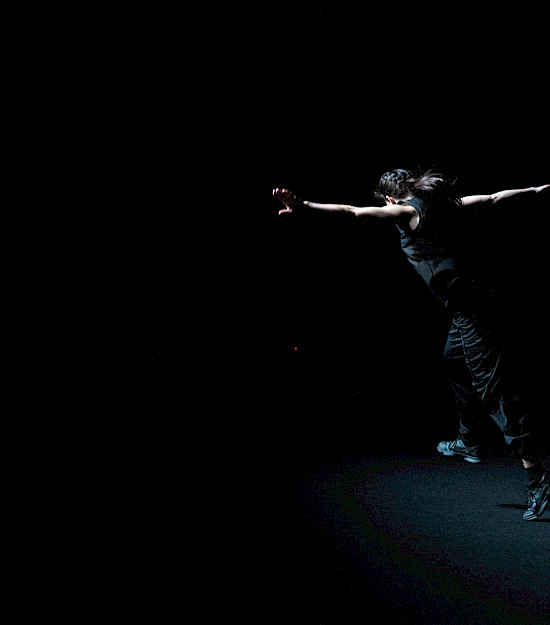
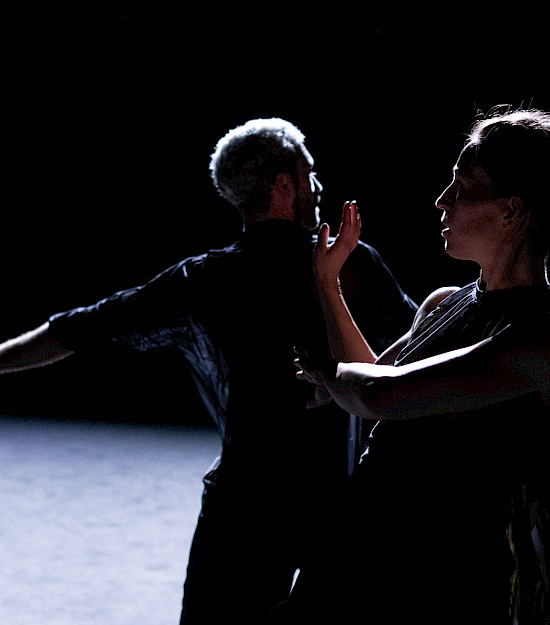
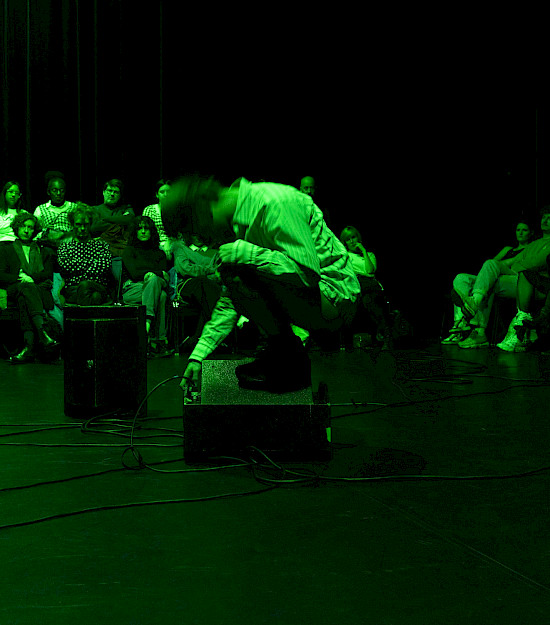
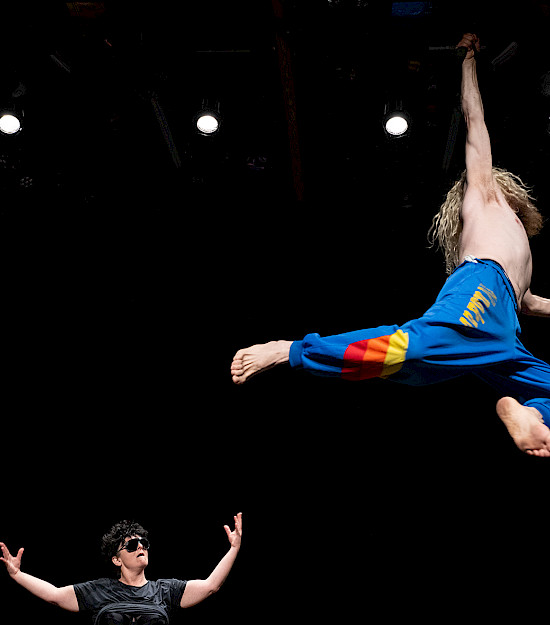
[ Review ] “Right from the start of the piece, four performers trace a shifting line with outstretched arms, crossing their steps and arms in unison. Then comes the first a cappella song. As a counterpoint to Kassia’s vocal compositions, group dances take shape (…). The music, played live by Cate Hortl and adorned with a thousand colours, creates a very contemporary soundscape during the non-vocal moments. This approach, consistent with the choreographer’s vision, produces moments of great intensity, such as Marta Capaccioli’s final dance, teetering on the edge of a fall and complete surrender. The piece moves between memory, evocation and contemporary projection. (…) Kassia Undead strikes a balance between presence and absence, between archive and fiction. Lara Barsacq brings the figure of Kassia of Constantinople to life whilst accepting that she remains, despite everything, elusive. The piece thus implicitly questions the possibility of bringing such a distant figure to life through choreography, and reveals the power of the choreographer’s act of reactivation.”
Filip Forestier, à voir et à danser, 16.05.26

[ Review ] “The blend of formal freedom and musical excellence in this project makes Kassia Undead a profoundly contemporary and universal piece, 12 centuries after the music was first composed. A beautiful, unusual and powerful work celebrating the power of music and the feminine.”
Delphine Goater, Resmusica, 15.05.26

[ Review ] “Kassia Undead is neither a reconstruction nor a tribute. It is an attempt to give voice to what still endures in Kassia: a vocal intensity, a freedom of movement, a way of navigating the world whilst refusing to be silenced. Barsacq transforms this enduring legacy into theatrical material, presenting a performance in which the voice becomes architecture and the bodies its shifting pillars. “I hate silence when it is time to speak,” she used to say. The voice as a matrix, the body as a reliquary, a piece straddling East and West, a Byzantine work…”
Agnès Izrine, Danser Canal Historique, 12.05.26

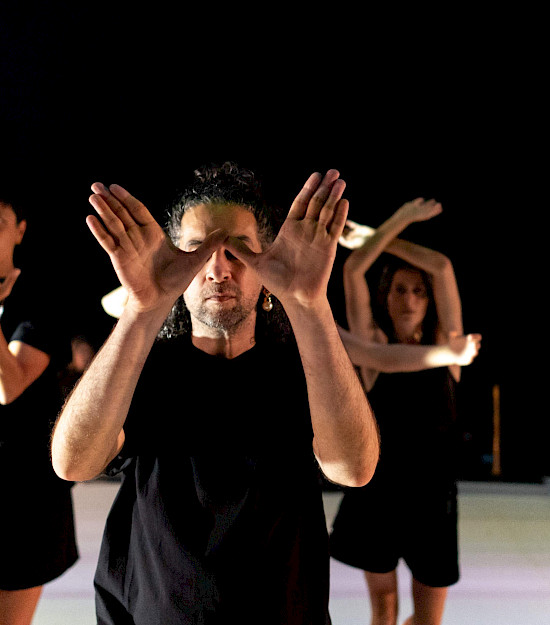
[ Review ] “This group, part faun, part troubadour, evolves into a formation that can only come about through collective effort. The bodies merge and come together, becoming essential links in the construction of an image—for example, this seated circle, where the tips of the feet converge at a central point, resembling a church rose window. Or these processions, with arms folded horizontally across the body, forming a perfect triangle when it comes to invoking the dead, here without turning tables. Kassia Undead is Lara Barsacq’s fifth creation. She continues her quest to rediscover forgotten figures. She invents a secular, contemporary ritual where invocations flow seamlessly through dance, fabric, or voices, and draws us into this gentle flow, where rigidity gives way to fluidity.”
Amélie Blaustein-Niddam, Cult.news, 12.05.26

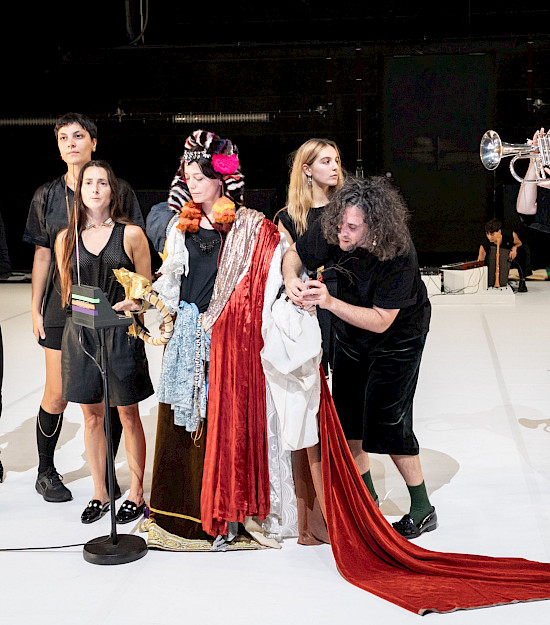
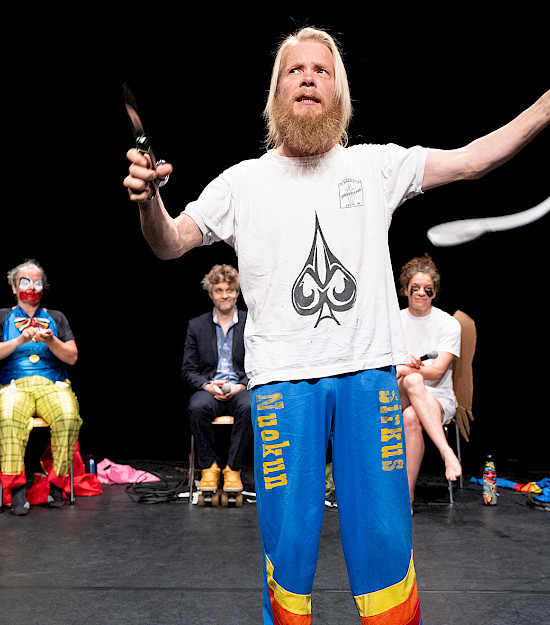
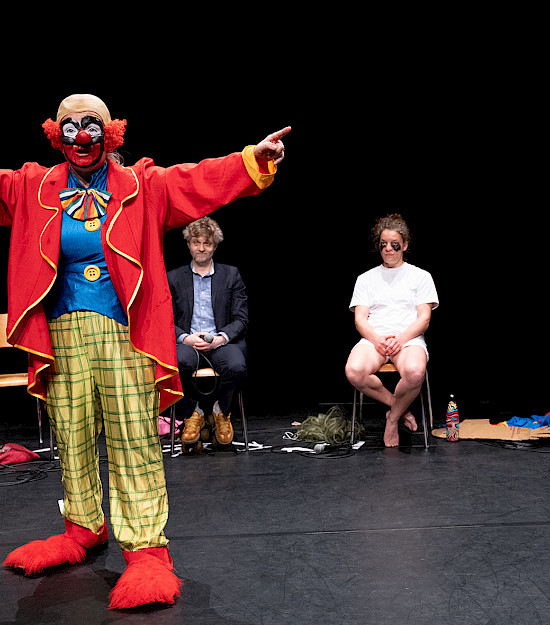
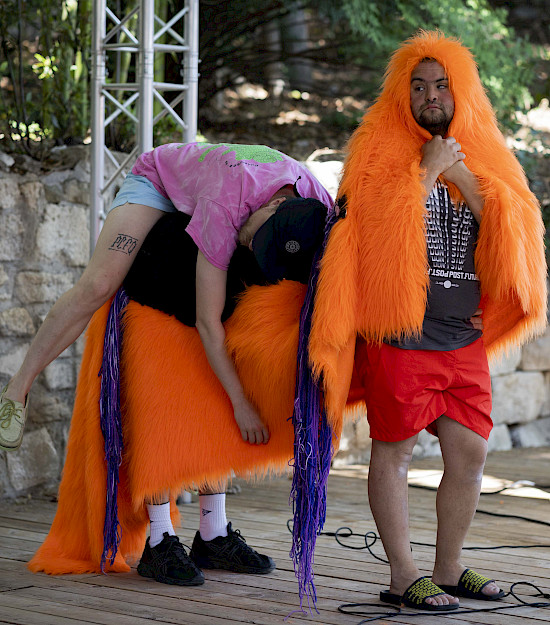
[ Review ] "Eight performers inhabit the stage in a celebration that once again delves into history to reconnect it with the present. Song creeps into dance, creating a polyphonic infusion with captivating languor and intoxicating rushes. Kassia Undead is part carnival sarabande, part funeral ritual, oscillating between East and West, navigating from medieval chants to electro flights of fancy, deploying an energy that is at times sensual, at times mystical, against a backdrop of hybrid textile creations by Ateliers Indigo. And when Cate Hortl is gradually draped by her acolytes in heavy fabrics and shimmering ornaments, she transforms into the priestess of a new cult, a warrior icon adorned with unprecedented gentleness and power. ‘I hate silence when it is time to speak,’ wrote Kassia. Embraced by Lara Barsacq and her accomplices, her thoughts resonate, sharp and enveloping, in today's turmoil. In the necessary place of the fight against oblivion."
Marie Baudet, La Pointe, 2.11.25

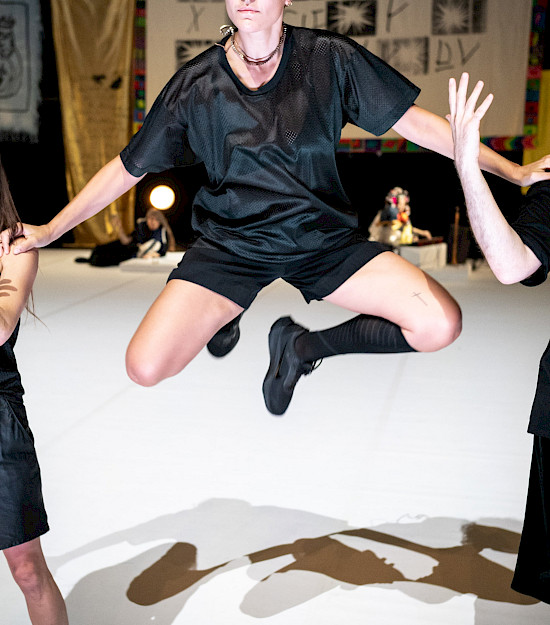
[ Review ] “After her pieces evoking the Ballets Russes, Lara Barsacq has now turned her attention to Kassia or Cassienne of Constantinople. (...) As usual, Lara Barsacq evokes and invokes this character through dance, music and song. Here, singers, dancers and the director are all on the same stage, switching from one role to another with astonishing ease. Voiceovers invoke Kassia in the hope of seeing her appear on stage, but it is through the eight performers that she will manifest herself. Even more than in previous works, singing and music take centre stage, creating a spellbinding atmosphere where the combination of voices works wonders, but where the use of certain unexpected instruments sometimes enriches the message. The dance, for its part, draws inspiration from this universe. Discreet, it unfolds in fits and starts, beginning with a human chain where we think we detect a few sirtaki movements, then developing, as the songs progress, in the manner of medieval dances, between grace and the grotesque. Sometimes the feet pound the ground in the style of flamenco, sometimes the bodies twist as in medieval bas-reliefs. Far from any linear narrative, Kassia Undead thus revives the spirit of an exceptional woman and achieves an ideal blend of music and movement.”
Jean-Marie Wynants, Le Soir, 14.10.25

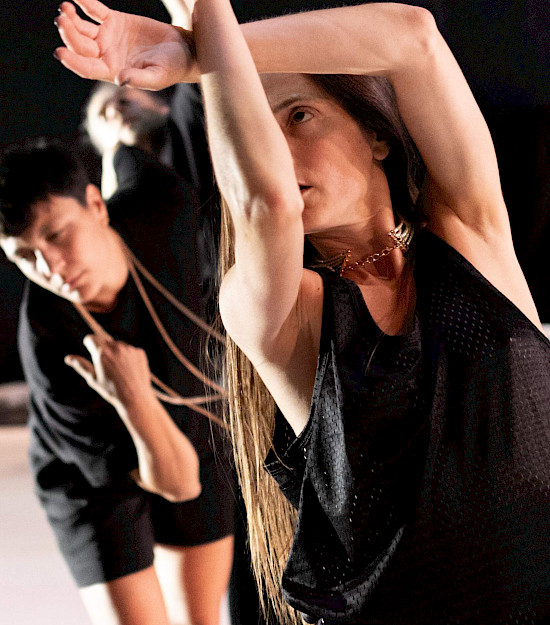
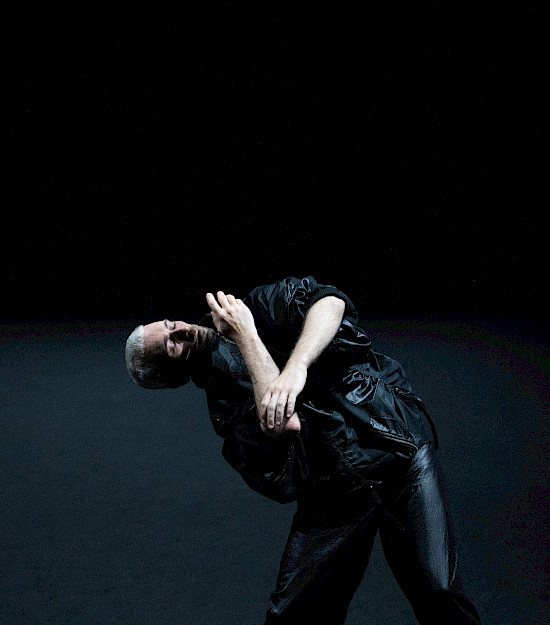
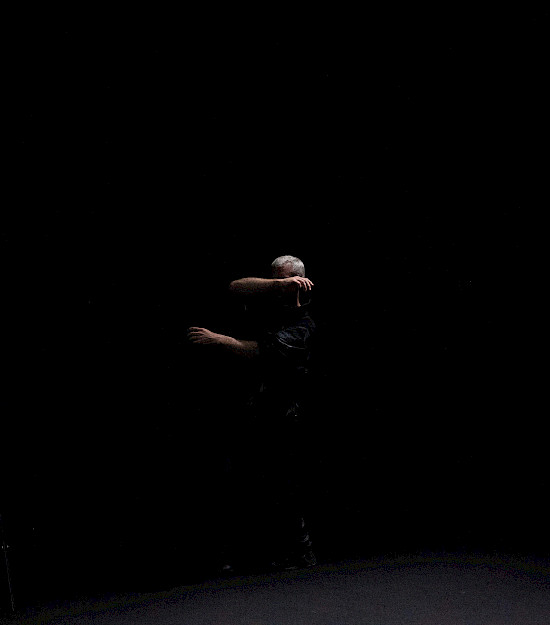
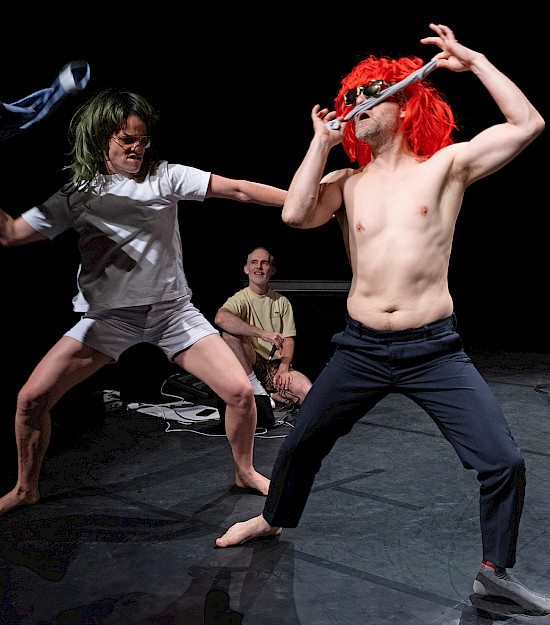
[ Review ] “The choreography oscillates between solemn slowness and rapid, disjointed movements. The gestures evoke divinities, funeral figures, processions or fanfares. The percussive strikes of the feet, like frenzied tarantellas, break up the patterns. The bodies, like animated totems, give the stage a hypnotic and sensual intensity. (...) The evanescent nature of this piece is captivating. For me, “KASSIA UNDEAD” is like a perfume. A scent that appears and then fades away, leaving a heady trail. (...) Like each note of this fragrance, each fragment of the piece reveals itself at its own pace. “KASSIA UNDEAD” is a puzzle with finely crafted pieces: sometimes they fit together, sometimes they don't. It is a dance of sensuality, mysticism, invocation and incantation. The piece is carried by a remarkable cast: dancers and singers blend so subtly that it is almost impossible to distinguish their training. This rare porosity reinforces the fluidity of the whole and draws us into a universe that is both real and almost paranormal. (…) This is not a work that seeks thrills or brutal denunciation: its strength lies in subtlety and curiosity. It illustrates what I increasingly perceive in today's performing arts: a form capable of showing the historical and structural violence of the world without resorting to it. Through documentation and sensory experience, it invites us to see the past differently in order to think about and build a future that is, if only a little, more embodied and responsible.”
Lodie Kardouss, pzazz Theater, 14.10.25

[ Interview ] "In recent years, my work has gradually shifted towards figures who have been forgotten or erased by history. They are often women, anonymous individuals, marginal figures, forgotten people whose voices have been lost in the noise of history. They often appear in the course of archival research, and I feel a responsibility to listen to them. It is often an emotional gesture before it is an intellectual one: an encounter, an upheaval, an intuition that must be followed. I don't know if it is me who finds them or if they come to me. Using this material, I seek to understand how they can resonate today, how to give them a body, a voice, a vibration.”
Wilson Le Personnic with Lara Barsacq, Oct 2025

[ Interview ] “I like to think that Kassia came to me. She appeared during a discussion with the Royal Philharmonic Orchestra of Liège, which had asked me to work on a symphonic piece. I wanted to bring in a female composer, and while doing some research on the internet, I came across Kassia, who was presented as one of the first European composers, before Hildegard von Bingen. I found her music extraordinary: liturgical hymns to saints and martyrs, sung with very few instruments. Although this music wasn't suitable for the philharmonic project, Kassia stayed with me. Since then, she has haunted the studio, and today we invoke her on stage. (…) We try to awaken her with macabre dances and steps inspired by the specific and sometimes grotesque gestures of the Middle Ages, knowing full well that we only have our imagination associated with representations to visualise them. Using these elements, medieval iconography and Kassia's songs, we have recreated a new imagery and a new set of gestures, invented through improvisation. These then take the form of tableaux vivants that undergo a metamorphosis. We have worked on slow-motion movements to represent Kassia's return from beyond the grave. Through this piece, we create our own folklore, nourished by fiction and storytelling. In this ceremony, I invoke forgotten women by saying their names, so that they may accompany us, heal us and carry us. I like to believe in the utopia that they will return to soothe us, even if the times are not conducive to the coexistence of differences.”
Belinda Mathieu with Lara Barsacq, September 2025

[ Interview ] “I wanted to discover a work composed by a woman. During my research, I came across Kassia of Constantinople. Her songs moved me deeply: female voices of rare beauty and intensity. (...) I knew then that I wanted to take it further. To create a piece in which her music would be sung live, embodied. (...) Her music is astonishing: very relaxed, sometimes offbeat. It has a unique vocal intensity. The show allows you to discover this sound material, to immerse yourself in the world of the voice and its resonances.”
Anne Golaz with Lara Barsacq, Nouvelles De Danse, 29.09.25